
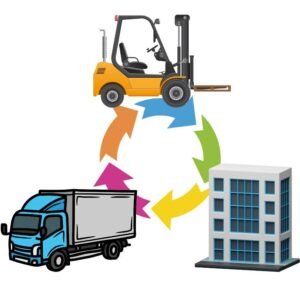
Load securing is not just best practice; across Europe it is legally required. Every actor in the transport chain – the driver, shipper, vehicle owner and carrier – must ensure cargo is properly secured. Regulations define minimum safety parameters, required securing forces and technical specifications for lashing equipment.
Non-compliance leads to serious consequences: fines, vehicle immobilization, higher insurance premiums, and even criminal liability in case of injury. Proper compliance reduces accidents, protects lives and goods, and fosters fair competition.
Legal Responsibilities – Who Is Accountable?
European law establishes shared responsibility:
- Driver: checks securing before departure and en route.
- Shipper/Loader: ensures proper stowage and accurate declaration of cargo details.
- Carrier/Owner: provides suitable vehicles and equipment.
Neglecting these obligations can lead to administrative fines or even criminal charges if poor securing causes injury. Directive 2014/47/EU harmonizes roadside inspections across the EU and includes load securing as a control item.
VDI 2700 – The Core Technical Guideline
The VDI 2700 Guideline Series is widely used in Europe as best practice for load securing. Key principles include:
- Friction coefficient (µ): aim for ≥ 0.6 µ; most untreated surfaces have lower values.
- Dynamic forces: 0.8 g forward braking, 0.5 g lateral, 0.5 g backward acceleration.
- Calculation principles: lashing forces depend on cargo weight, friction and lashing angles.
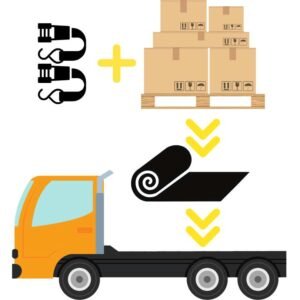
- Certified equipment: only tested anti-slip mats and lashing devices should be used.
- Even load distribution: prevents tipping and axle overload.
Other EU & International Standards
Besides VDI 2700, other relevant norms are:
- EN 12195-1: calculation/testing of lashing forces.
- Directive 2014/47/EU: roadside checks on load securing and driver documentation.
- UNECE Guidelines: harmonized cargo securing recommendations.
- ISO Standards: specific to vehicle types (e.g., ISO 27956 for vans).
All emphasize certified equipment, trained personnel and proper documentation.
Why Compliance Matters
Compliance brings benefits beyond avoiding fines:
- Reduced accident rates.
- Less cargo damage and related costs.
- Valid insurance coverage.
- Stronger reputation and customer trust.
- Fewer environmental impacts from accident waste.

Key Points Recap
- µ ≥ 0.6 friction coefficient (VDI 2700 reference).
- Dynamic forces: 0.8 g forward, 0.5 g sideways/backward.
- Shared legal responsibility among driver, loader, and carrier.
- Use certified, tested equipment and document compliance.
For practical examples of friction and mat usage, see our Load Safety & Friction page and Usage & Best Practices.
For legal texts: Directive 2014/47/EU, UNECE, ISO.
Disclaimer
The information on this page is for general guidance only and should always be checked and adapted to each specific situation and applicable rules.
Although compiled with care, no guarantee is given for completeness or suitability. Use of this information is at your own discretion and risk.


