
Anti-slip mats are essential components for safe cargo transport across many industries. Whether you move standard pallets, heavy steel coils, paper reels, or fragile goods, the right mat increases friction, reduces sliding risks and helps meet safety regulations such as VDI 2700 and EU Directive 2014/47.
Their applications go beyond a single niche: they protect goods, enhance safety and reduce costs. Below we explore the main cargo types, practical benefits, and common questions professionals ask.
Applications by Cargo Type

Palletized Goods
Palletized cargo is the most common type of freight in logistics and often appears deceptively stable. In reality, wooden or plastic pallet skids have a low friction coefficient on truck or container floors, especially if surfaces are smooth, dusty or slightly oily.
Using anti-slip mats under each pallet contact point increases the coefficient of friction significantly, reducing the risk of sliding during emergency braking or sudden maneuvers.
Typical use: full sheets covering the floor or strips under each pallet runner.
Benefits:
- Reduces the number of lashing straps needed to meet securing forces required by VDI 2700.
- Protects packaging and product edges from damage caused by excessive movement.
- Improves load stability on uneven or worn-out vehicle beds.
Example: Using mats with µ ≥ 0.6 under standard pallets can cut the number of straps needed from 8 to 4, while still complying with VDI 2700.
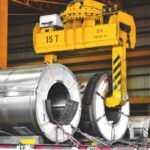
Steel Coils and Heavy Rolls
Steel coils, paper reels, and similar cylindrical loads present complex securing challenges. Their rolling and sliding forces can reach high values due to weight concentration and vehicle dynamics.
Anti-slip mats placed under recessed chocks, wedges or support beams increase friction and prevent longitudinal and lateral displacement.
Key practices:
- Combine mats with coil wells, wooden wedges and cross lashing.
- Select mats with high compressive strength (to prevent excessive deformation under heavy loads).
- Maintain clean surfaces; oil or scale on coils can reduce friction dramatically.
Benefits:
- Reduces movement during braking and curves.
- Protects the surface of coils or reels from abrasion.
- Helps comply with VDI 2700 Annex for coil securing and UNECE recommendations.
Example: A 10-ton steel coil placed on mats with µ ≥ 0.6 and appropriate blocking can meet securing requirements with fewer lashings compared to bare metal surfaces.

Pipes, Bars and Long Materials
Long loads such as steel pipes, bars, timber beams or profiles are prone to sideways sliding and uneven load distribution.
Anti-slip strips positioned at each contact point (between the load and vehicle bed, and between stacked layers if needed) significantly increase stability.
Best practices:
- Combine mats with stanchions, blocking or wedges to prevent rolling.
- Ensure even spacing of mats to distribute weight and avoid pressure points.
- Regularly inspect mats for wear or contamination, especially with sharp-edged loads.
Benefits:
- Improved lateral and longitudinal stability.
- Lower risk of stack collapse and injury.
- Reduced strain on lashing devices.

Big Bags and Flexible Containers
Flexible intermediate bulk containers (FIBCs, or “big bags”) and plastic bins can easily shift or tilt on smooth truck floors due to their flexible structure and variable weight distribution.
Using anti-slip mats underneath each bag or a continuous sheet covering the loading area helps keep stacks aligned and prevents movement.
Key practices:
- Place mats between stacked layers when transporting multiple rows of big bags.
- Ensure full-surface contact between mat and bag base for maximum friction.
- Check mats for sharp objects to avoid bag punctures.
Benefits:
- Maintains vertical alignment, lowering risk of collapse.
- Prevents sliding and tipping during transit.
- Reduces need for excessive lashing or shrink-wrapping.

Sensitive and Fragile Cargo
Delicate goods (glass panels, electronics, household appliances, precision machinery) not only need securing against sliding but also protection from shocks and vibrations.
Anti-slip mats can act as a friction booster and light cushioning layer, reducing micro-movements that can cause scratches or misalignment.
Best practices:
- Combine mats with protective padding, edge guards and appropriate packaging.
- Use mats with adequate thickness to balance friction and cushioning properties.
- Avoid over-compression; mats should maintain their structure to remain effective.
Benefits:
- Enhances stability even on uneven or aged vehicle beds.
- Reduces vibration and shock transfer.
- Adds surface protection to minimize cosmetic damage.
Benefits Across All Applications
Regardless of cargo type, anti-slip mats deliver consistent advantages:
- Higher friction (µ ≥ 0.6 achievable).
- Reduced sliding and rolling risks.
- Time and cost savings (fewer straps and faster securing).
- Lower damage rates and fewer insurance claims.
- Support for EU and VDI compliance.
Disclaimer
The information on this page is for general guidance only and should always be checked and adapted to each specific situation and applicable rules.
Although compiled with care, no guarantee is given for completeness or suitability. Use of this information is at your own discretion and risk.


